
 By
By 

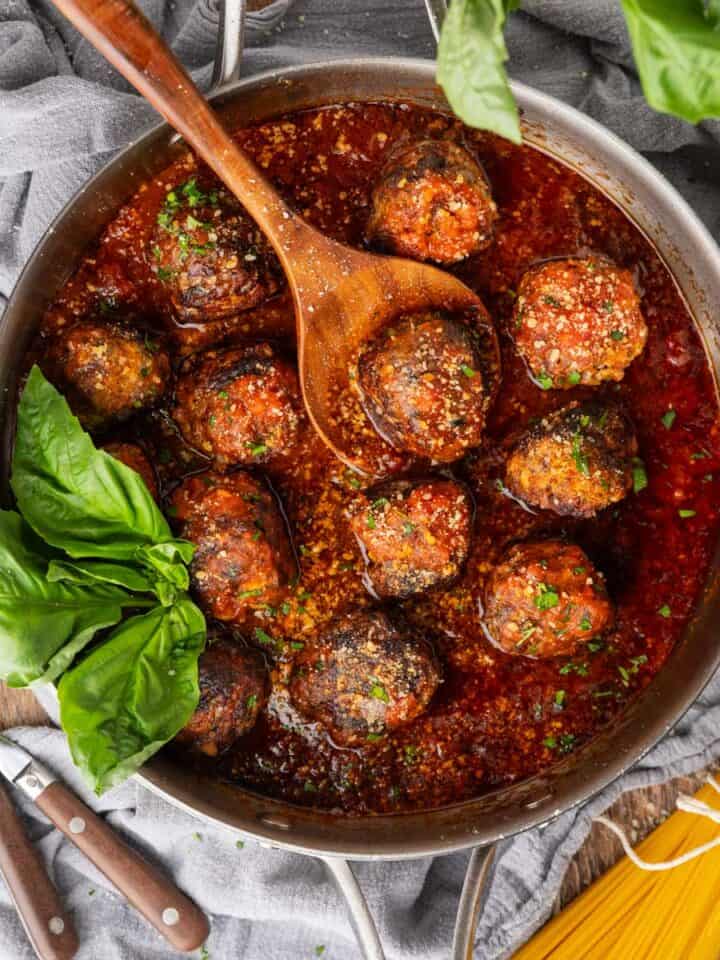
This Quick Marinara Sauce is a weeknight hero. Made with just a handful of pantry staples, it's ready in under 30 minutes and perfect for pasta, pizza, meatballs, and more. Forget the store-bought jar-this homemade marinara is rich, flavorful, and simple enough for any night of the week.
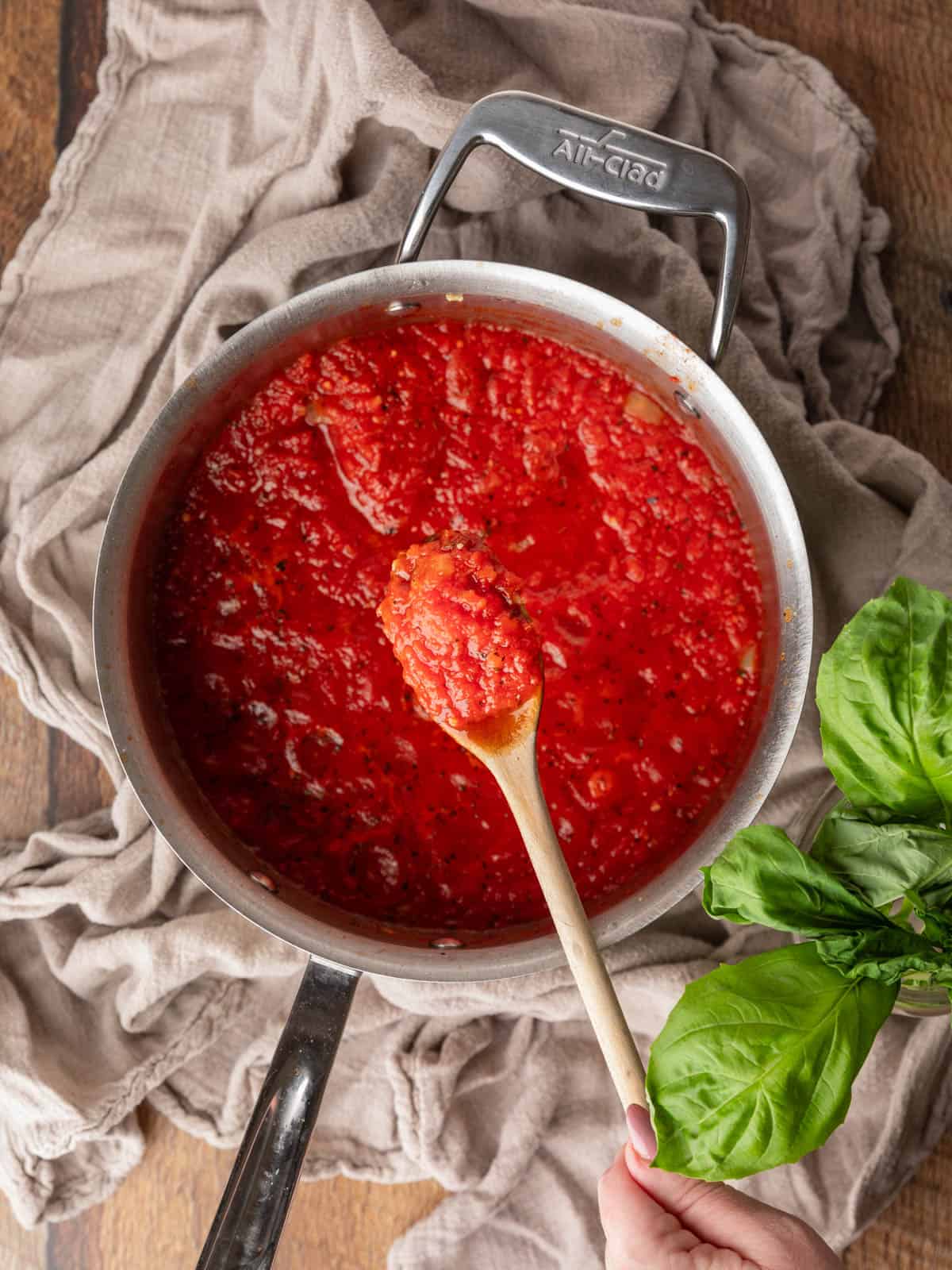
Marinara Sauce is the unsung hero of weeknight cooking-simple, versatile, and flavorful. It's the kind of recipe you can whip up while you're cooking the pasta, making it an ideal choice for nights when time is short, but a homemade touch still matters.
With just a handful of ingredients and minimal effort, this sauce is perfect for creating a meal that feels both easy and special. Whether you're tossing it with spaghetti and meatballs, using it as a dipping sauce, or spreading it over pizza dough, you'll love how this recipe brings big flavor with minimal fuss.
Jump to:
- What is Marinara Sauce?
- My Perfect Pasta Cooking Ratio
- 🥫 Marinara Sauce vs. Tomato Sauce
- Ingredients for this Recipe
- What are San Marzano tomatoes?
- How to Make this Easy Weeknight Marinara
- ⏲️ Kitchen Time Saver
- 💭 Frequently Asked Questions
- Amanda's Secret Tip
- 🍝 More Sauce Recipes to Make from Scratch
- Did You Make this Recipe?
- Recipe
- Comments
What is Marinara Sauce?
- Marinara, or alla marinara, likely originated in Southern Italy but has become a staple in Italian-American cuisine. It means "sailor-style", which may be a nod to its quick and simple style.
- In short, Marinara is a simple tomato-based sauce. It's quick-cooked, can vary in texture, and has a fresh, light tomato flavor.
My Perfect Pasta Cooking Ratio
1 Pound Pasta - 4 Quarts Water - 1 Tablespoon Salt
(Don't Forget to Cook Pasta Al Dente!)
🥫 Marinara Sauce vs. Tomato Sauce
Texture and Consistency:
- Marinara is lighter and can be smoother or have chunks of tomatoes.
- Tomato sauce, sometimes called tomato gravy, is thicker and richer, with more texture and depth of flavor.
Flavor:
- Marinara uses fewer ingredients, focusing on the fresh flavor of tomatoes, garlic, onions, and Italian herbs.
- Tomato sauce has a deep and more complex flavor because it's slow-simmered with additional ingredients like meat or red wine.
Best Uses:
- Marinara is great for dipping sauce for Cheese Stuffed Bread Bites or Arancini, lighter pasta dishes like Homemade Manicotti, or as a base for quick recipes like Chicken Parmesan or Flatbread Pizzas.
- Tomato sauce is best for hearty pasta dishes, meat dishes, or braising like in Baked Mostaccioli, Lasagna with Ricotta Cheese, Braised Beef Braciole, or Eggplant Parmesan.
Ingredients for this Recipe
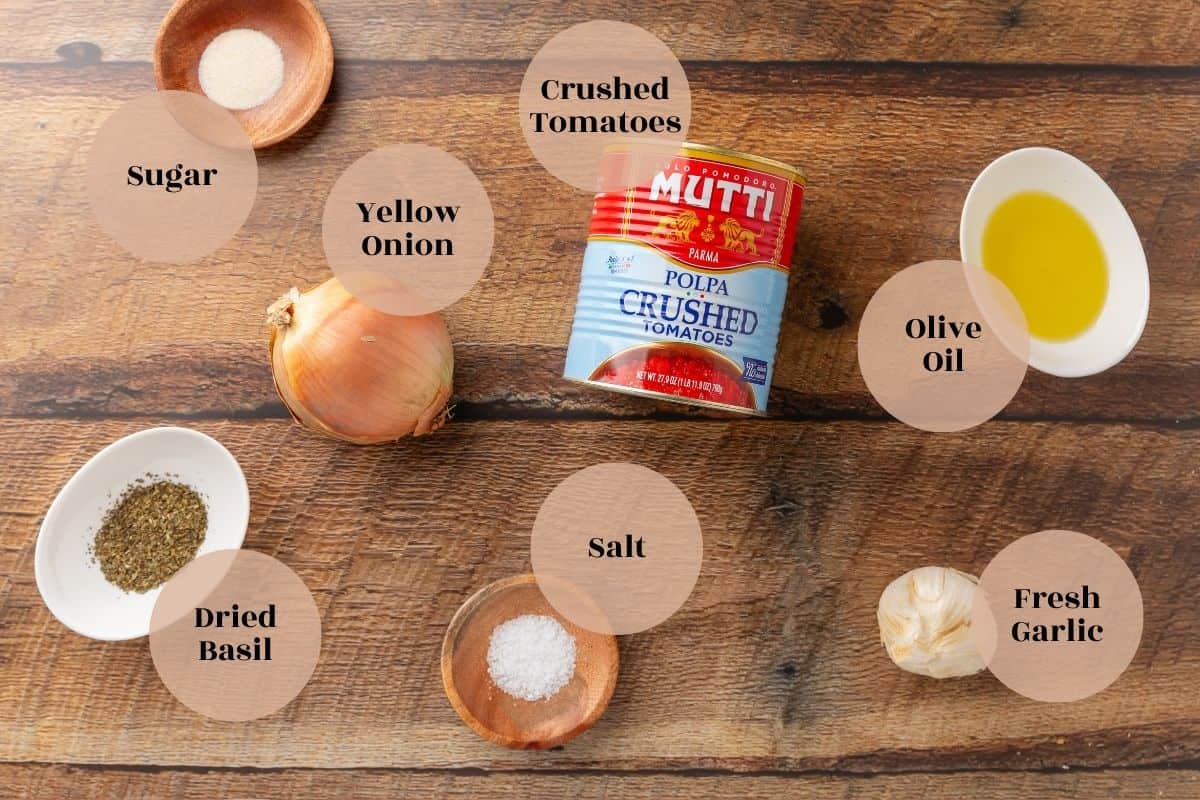
- Tomatoes - I use a 28-ounce can of crushed tomatoes that gives the sauce a smoother consistency while still having a bit of texture. A can of whole San Marzano tomatoes can be blended to your liking. They have a natural sweetness, low acidity, and fewer seeds, making them ideal for sauces.
- Olive Oil - Since this sauce has minimal ingredients and is quick to cook, opt for a type of olive oil of higher quality.
- Aromatics - This sauce starts with onions, garlic, and dried basil to develop flavor quickly. Dice the onions and garlic finely if you prefer a smoother sauce, or leave them slightly larger for more texture.
- Seasonings - Seasoning happens at the end and can be simple and adjusted based on your preference. I use salt, and a pinch of sugar for sweetness. Add crushed red pepper flakes for a little spice!
What are San Marzano tomatoes?
San Marzano tomatoes are a type of plum tomato grown in the volcanic soil near Mount Vesuvius in Italy. They're prized for their rich flavor, low acidity, and meaty texture, which makes them perfect for sauces and authentic Italian cooking.
How to Make this Easy Weeknight Marinara
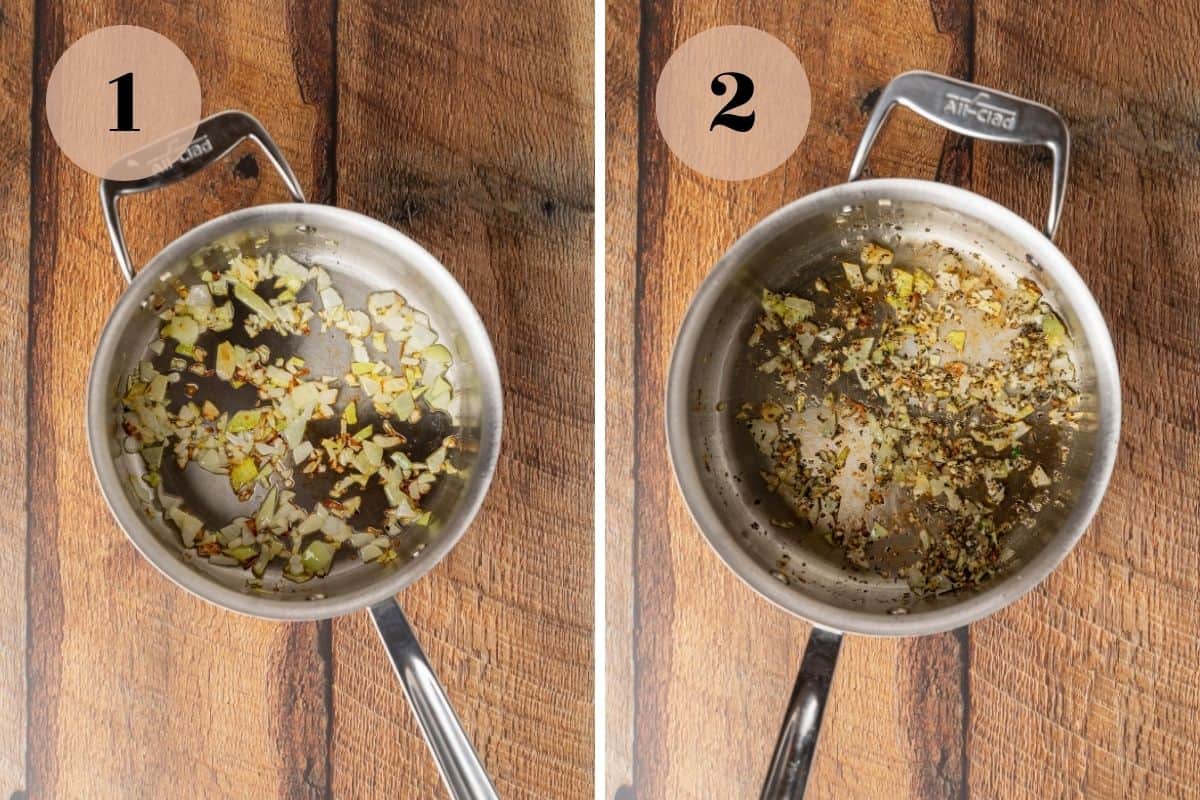
Cook Aromatics - First, heat the oil in the pan and saute the onions to soften them. Add the garlic and basil and cook until they're fragrant.
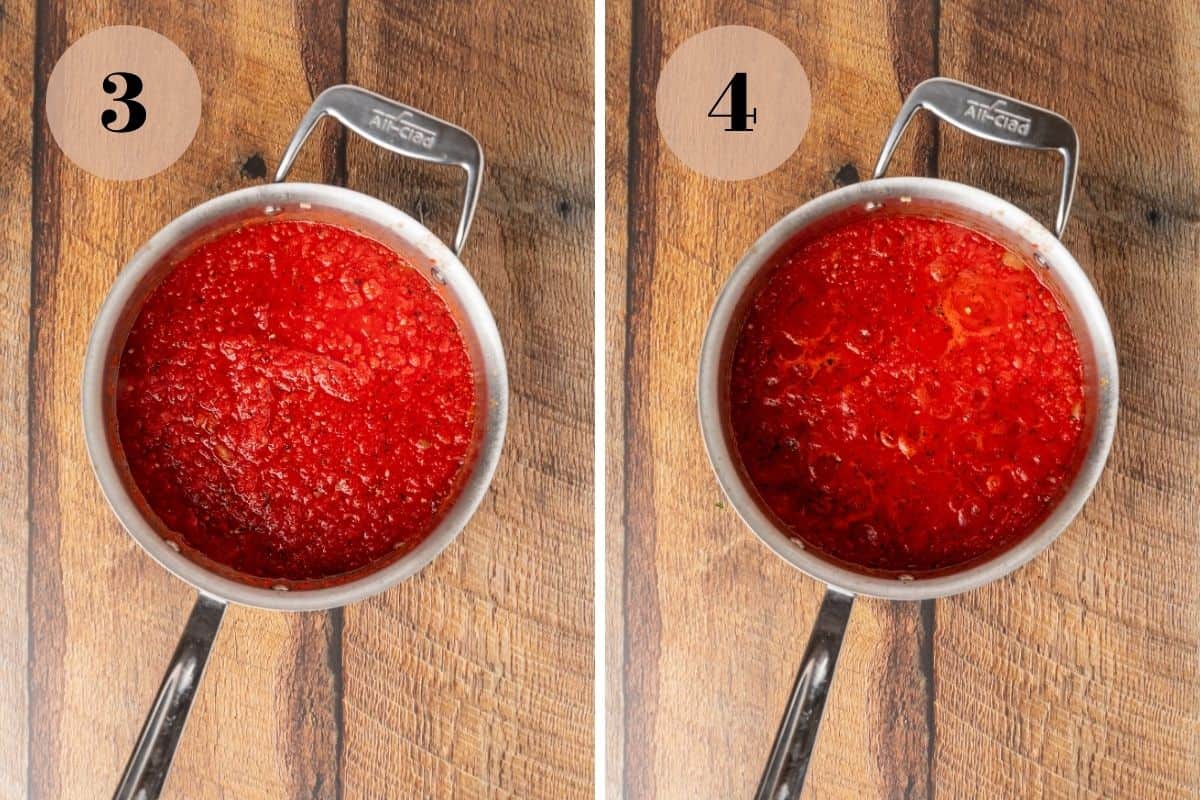
Simmer Sauce - Add the tomatoes, stir to combine, and bring the mixture to a gentle boil. Then, reduce the heat and let it simmer for 15 minutes, allowing the flavors to meld together.
Season and Serve - Lastly, before serving, taste your sauce and adjust the seasonings as desired.
⏲️ Kitchen Time Saver
The onions and garlic can be cut while you heat the pan and bring the water to a boil for your pasta. While the sauce simmers, you can cook your pasta.
💭 Frequently Asked Questions
Yes, double the sauce and freeze it for later. For lunches or smaller portions, freeze the sauce in an ice cube tray. Cool it completely and store it in an airtight container or freezer bag for up to 6 months. Defrost the sauce in the refrigerator, then reheat in a small pot over low heat.
Fresh tomatoes can be used for marinara. I would recommend blanching them first, then peeling and removing the seeds. Cooking time will be slightly longer to allow the tomatoes to break down properly.
Amanda's Secret Tip
Add a bit of water from cooking the pasta to the simmering sauce. It enhances the flavor of the sauce and helps it cling better to the pasta.
🍝 More Sauce Recipes to Make from Scratch
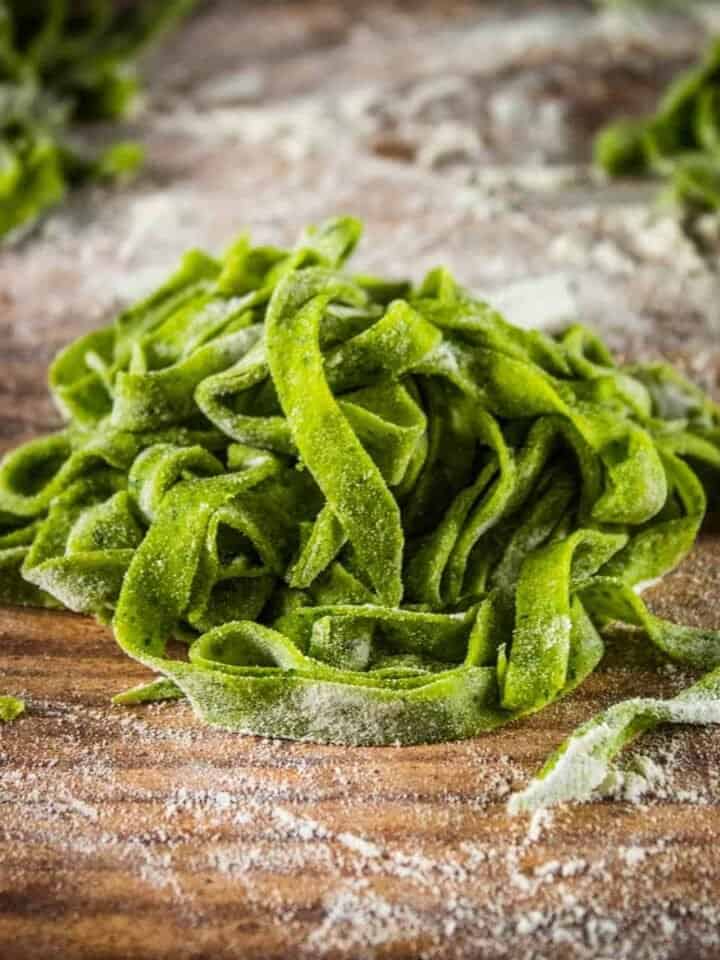
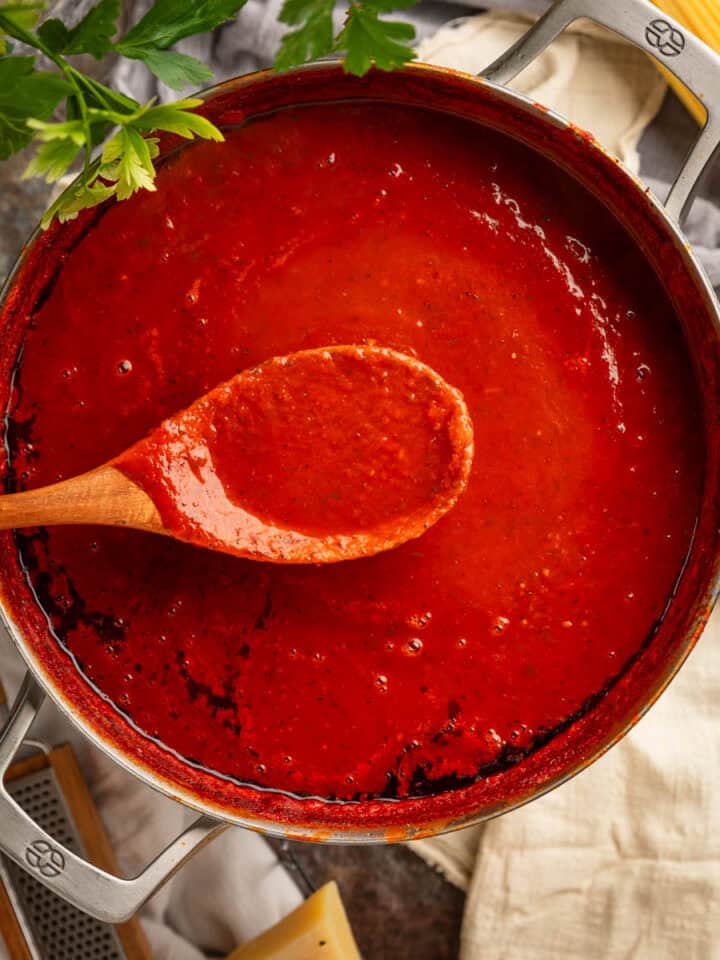
If you loved making this Easy Marinara Sauce, here are some more of my homemade sauce recipes you can make!
Recipe
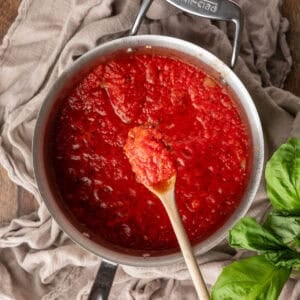
Homemade Marinara
Ingredients
- 28 ounces canned crushed tomatoes
- 1 tablespoon olive oil
- ½ cup diced yellow onion, about ½ medium onion
- 1 tablespoon minced fresh garlic, 2-3 cloves
- 1 teaspoon dried basil
- ½ teaspoon kosher salt
- pinch sugar
Instructions
- Heat a medium saucepan over medium heat and add the olive oil.
- Sauté the diced onions for 3-5 minutes until softened, then add the minced garlic and dried basil. Cook for about 30 seconds until fragrant.
- Pour in the crushed tomatoes, stir to combine, and bring to a simmer.
- Reduce the heat to medium-low and simmer for 15 minutes, stirring occasionally while you make the meatballs. (If the sauce begins to spurt, reduce the heat to low).
- Add salt and sugar and adjust seasonings if necessary.
Notes
- Pasta Water - Add a bit of water from cooking the pasta to the sauce. It adds flavor and helps it stick to the pasta.
- Freezing - Cool the sauce completely and store it in freezer bags for up to 6 months. Defrost the sauce in the refrigerator, then reheat in a small pot over low heat. For small portions, freeze in an ice cube tray, then transfer to a freezer bag.

Kristina
This sauce is so much better then I would have ever imagined! With so few ingredients I wasn't expecting anything special but this sauce has quickly become our go to marinara rather then the jarred stuff.
Amanda Scarlati
Thanks Kristina! I'm so glad you enjoyed it as much as we do!